
Hotels in Greece
 All Hotels in Greece
- Hotels in Greece
- Greece rooms
- Greece apartments
- Greece villas
- Greece Accommodation
- Accommodation special offers
Central Greece Hotels- Central Greece district
- Athens City hotels
- Aitoloakarnania hotels
- Attica hotels
- Evrytania hotels
- Evia island hotels
- Fokida hotels
- Fthiotida hotels
- Viotia hotels
Crete island HotelsCyclades islands Hotels- Cyclades islands hotels
- Amorgos hotels
- Anafi hotels
- Andros hotels
- Antiparos hotels
- Delos hotels
- Donoussa hotels
- Folegandros hotels
- Heraklia hotels
- Ios hotels
- Kea (Tzia) hotels
- Kimolos hotels
- Koufonissi hotels
- Kythnos hotels
- Milos hotels
- Mykonos hotels
- Naxos hotels
- Paros hotels
- Santorini hotels
- Schinoussa hotels
- Serifos hotels
- Sifnos hotels
- Sikinos hotels
- Syros hotels
- Tinos hotels
Dodecanese islands Hotels- Dodecanese islands hotels
- Agathonissi hotels
- Arkyi hotels
- Astypalea hotels
- Halki hotels
- Kalymnos hotels
- Karpathos hotels
- Kassos hotels
- Kastelorizo hotels
- Kos hotels
- Leros hotels
- Lypsi hotels
- Nisyros hotels
- Patmos hotels
- Rhodes hotels
- Symi hotels
- Telendos hotels
- Tilos hotels
Epirus Hotels- Epirus hotels
- Arta hotels
- Ioannina hotels
- Preveza hotels
- Parga hotels
- Syvota hotels
- Thesprotia hotels
Ionian islands Hotels- Ionian islands hotels
- Corfu hotels
- Ithaca hotels
- Kefalonia hotels
- Kythira hotels
- Lefkada hotels
- Paxos & Antipaxos hotels
- Zakynthos hotels
Macedonia Hotels- Macedonia hotels
- Grevena hotels
- Kastoria hotels
- Kozani hotels
- Florina hotels
- Imathia hotels
- Thessaloniki hotels
- Chalkidiki hotels
- Pieria hotels
- Pella hotels
- Kilkis hotels
- Drama hotels
- Kavala hotels
- Thasos island hotels
- Serres hotels
North-eastern Aegean Hotels- North-eastern Aegean hotels
- Agios Efstratios hotels
- Chios hotels
- Fourni hotels
- Ikaria hotels
- Lesvos hotels
- Limnos hotels
- Oinousses hotels
- Psara hotels
- Samos hotels
Peloponnese Hotels- Peloponnese hotels
- Achaia hotels
- Argolida hotels
- Arcadia hotels
- Corinthia hotels
- Ilia hotels
- Lakonia hotels
- Messinia hotels
Saronic Gulf islands Hotels- Saronic Gulf islands hotels
- Agistri hotels
- Aegina hotels
- Hydra hotels
- Poros hotels
- Salamina hotels
- Spetses hotels
Sporades islands HotelsThessaly Hotels- Thessaly district hotels
- Kalambaka hotels
- Karditsa hotels
- Larissa hotels
- Magnesia hotels
- Pelion hotels
- Trikala hotels
Thrace Hotels
Find the appropriate accommodation in Greece.
- Vacation in Greece
- Family holidays
- Travel insurance
- Tours and Guided Tours
- Packages & Offers
- Sailing Greece
You need to upgrade your Flash Player
Please visit Adobe's Flash Player site to upgrade the most recent version.
Thank you.
If you are having issues with installing Adobe Flash Player, please make sure that all "pop-up killer" applications are turned off and you reinstall
the Adobe player.
Ionian islands
A quick tour in the Ionian islands, Greece
Vacation and accommodation in Greece is a complete Travel Guide for Greece. In Vacation-Greece you will find information on Greek islands and a list of hotels and villas in Ionian, studios and apartments for all budgets. Find hotel offers in Ionian, see maps and photos of Ionian, book flights, ferry tickets, discover Ionian, book guided tours and make hotel reservations.

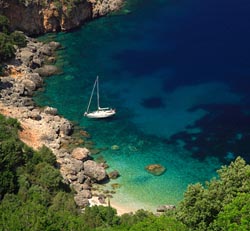 The Greek Ionian Islands are a small group of islands scattered just off the western Greek mainland with the exception of Kythira which lies off the southern coast of the Peloponnese at the point where the Ionian Sea meets the Aegean. For centuries they have maintained their own identity and culture, each is unique with captivating landscapes of rugged mountains, green hills and the turquoise waters of the Ionian Sea. It’s hard not to fall in love with the Ionian Islands and discovering them is a tantalising odyssey. Their natural beauty embraces the visitor – the vast olive groves, intriguing mountains and iridescent turquoise waters of the Ionian Sea offer something for all, adventure seekers, culture vultures and beach bums alike.
All the islands are part of the Greek periphery of Ionian Islands (Ioni-i Nisi), except for Kythira, which is part of the periphery of Attica. Kerkyra the largest island has a population of approximately 113,479 (including Paxos and Antipaxos), followed by Kefalonia with 39,579 (including Ithaca) followed by Zakynthos with 38,680, Lefkada with 22,536, Ithaca on its own has 3,052 and Kythira 3,000 trailed by Paxos 2,438 with the smallest population.
The Ioanian Islands traditionally called "Eptanisa", (which means the Seven Islands) but the group includes many smaller islands as well as the seven principal ones. The seven are, from north to south:
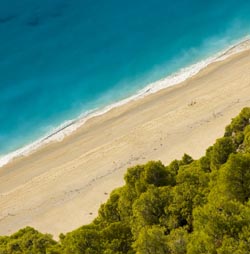 In recent decades the islands have lost much of their population through emigration and the decline of their traditional industries, which were fishing and marginal agriculture although there is no shortage of such activity.
Today their major industry is tourism specifically Kerkyra, which has a magnificent harbour, veritably splendid scenery and an abundance of picturesque ruins and castles. It is a favourite stopping place for cruise liners and rightly so.
The two best-known islands are Kerkyra (Corfu), which is one of the first places in Greece to attract holidaymakers as early as the 1960s, and Kefalonia which acquired fans worldwide after the publication of Captain Corelli's Mandolin and the movie that followed. Zakynthos is another popular holiday destination whilst those seeking a tranquil island untouched by mass tourism head directly for unspoilt Ithaca (Ithaki), the legendary kingdom of Odysseus the central figure in Homer’s Odyssey. Lefkada offers lively tourist resorts along with many wonderful walking trails and numerous traditional mountain villages.
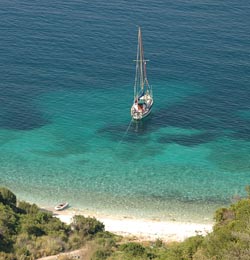 Situated in the west of mainland Greece the Ionian archipelago is very different from the Aegean islands in the east, in terms of both their culture and appearance. Here you'll find references of the French and British occupations rather than the Ottoman - Turkish influence which is so much in evidence on the Aegean islands.
The Ionian Islands receive above average rainfall and in fact Corfu has the highest rainfall in the whole of Greece resulting in their lush green landscapes in stark contrast to the Cyclades (with the exception of Naxos). They are carpeted with olive groves, cypresses and mountainsides awash with orchids and blanketed with wild flowers in springtime. The lush vegetation comes as something of a surprise to those more accustomed to the stark barrenness of the Cycladic islands. Winters are mild and wet but the summer months are extremely hot and humid as the islands don't receive the Meltemi which is the northern wind that cools the Aegean islands in the west.
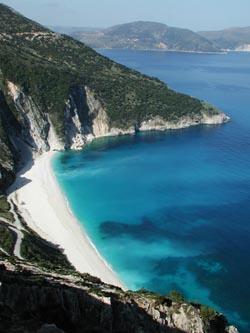 Each island has a decidedly distinct tradition, cuisine and architecture which are the residual influences of former invading forces such as the Venetians, French and British. These influences are obvious in Corfu Town, where you can watch a cricket match on the Spianada the only cricket pitch in the whole of Greece, drink under Parisian-style arcades and wander through the town’s Venetian-style alleyways.
Elsewhere in the Ionians such as in the traditional fishing or mountain villages, you can wander through central plazas shaded by bougainvilleas and carefully trained to provide shade trees, or relax under the vine-covered canopy of your favourite taverna or cultivated canopies thickly clad with jasmine with a soothing hypnotic scent.
There some instances of package-tourist beach developments which to some low key tourists who favour more isolation can be less to their taste and irksomely invasive, but these can be avoided unless organised tourist packages is what you are interested in.
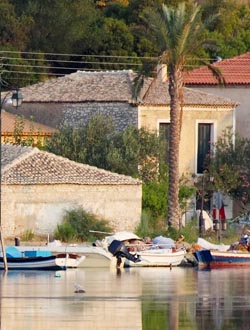 It’s very easy to get off the beaten track on any one of the islands because most are easily traversed by vehicle and some are small enough to be traversed by foot. A daily excursion can easily turn into a little adventure where you can find your own isolated swimming coves in a boat, wander through olive groves, or stumble across an authentic kafeneio (coffee house) the locals prefer. You will find that Greeks are very hospitable especially in the villages and you may well receive a kerasma (when a local buys you a drink or dish). Cultural adventurers can explore Venetian fortresses, Byzantine churches and Homeric sites. Adventure addicts can trek, cycle, windsurf and scuba dive and the less physically active can try bird-watching or a relaxing round of golf.
The culinary experience rounds off an Ionian journey where you can indulge in generous helpings of Greek cuisine with fresh vegetables served with a huge spoonful of local filoxenia (hospitality). Local dishes are as varying as the interchanging landscape and culture of the people, you palette will not get bored. The Ionian islands of western Greece remind many people of Italy, particularly the island of Kerkyra (Corfu). They receive more rain than the islands in the Aegean and so are greener. Known for their beautiful beaches, unique cuisine and package tourism they are not as easy to reach from Athens since there are no boats. Many people fly, some direct from their home countries.
The Greek Ionian Islands are a small group of islands scattered just off the western Greek mainland with the exception of Kythira which lies off the southern coast of the Peloponnese at the point where the Ionian Sea meets the Aegean. For centuries they have maintained their own identity and culture, each is unique with captivating landscapes of rugged mountains, green hills and the turquoise waters of the Ionian Sea. It’s hard not to fall in love with the Ionian Islands and discovering them is a tantalising odyssey. Their natural beauty embraces the visitor – the vast olive groves, intriguing mountains and iridescent turquoise waters of the Ionian Sea offer something for all, adventure seekers, culture vultures and beach bums alike. All the islands are part of the Greek periphery of Ionian Islands (Ioni-i Nisi), except for Kythira, which is part of the periphery of Attica. Kerkyra the largest island has a population of approximately 113,479 (including Paxos and Antipaxos), followed by Kefalonia with 39,579 (including Ithaca) followed by Zakynthos with 38,680, Lefkada with 22,536, Ithaca on its own has 3,052 and Kythira 3,000 trailed by Paxos 2,438 with the smallest population.
The Ioanian Islands traditionally called "Eptanisa", (which means the Seven Islands) but the group includes many smaller islands as well as the seven principal ones. The seven are, from north to south:
Ionian islands
In recent decades the islands have lost much of their population through emigration and the decline of their traditional industries, which were fishing and marginal agriculture although there is no shortage of such activity. Today their major industry is tourism specifically Kerkyra, which has a magnificent harbour, veritably splendid scenery and an abundance of picturesque ruins and castles. It is a favourite stopping place for cruise liners and rightly so.
The two best-known islands are Kerkyra (Corfu), which is one of the first places in Greece to attract holidaymakers as early as the 1960s, and Kefalonia which acquired fans worldwide after the publication of Captain Corelli's Mandolin and the movie that followed. Zakynthos is another popular holiday destination whilst those seeking a tranquil island untouched by mass tourism head directly for unspoilt Ithaca (Ithaki), the legendary kingdom of Odysseus the central figure in Homer’s Odyssey. Lefkada offers lively tourist resorts along with many wonderful walking trails and numerous traditional mountain villages.
Situated in the west of mainland Greece the Ionian archipelago is very different from the Aegean islands in the east, in terms of both their culture and appearance. Here you'll find references of the French and British occupations rather than the Ottoman - Turkish influence which is so much in evidence on the Aegean islands. The Ionian Islands receive above average rainfall and in fact Corfu has the highest rainfall in the whole of Greece resulting in their lush green landscapes in stark contrast to the Cyclades (with the exception of Naxos). They are carpeted with olive groves, cypresses and mountainsides awash with orchids and blanketed with wild flowers in springtime. The lush vegetation comes as something of a surprise to those more accustomed to the stark barrenness of the Cycladic islands. Winters are mild and wet but the summer months are extremely hot and humid as the islands don't receive the Meltemi which is the northern wind that cools the Aegean islands in the west.
Each island has a decidedly distinct tradition, cuisine and architecture which are the residual influences of former invading forces such as the Venetians, French and British. These influences are obvious in Corfu Town, where you can watch a cricket match on the Spianada the only cricket pitch in the whole of Greece, drink under Parisian-style arcades and wander through the town’s Venetian-style alleyways. Elsewhere in the Ionians such as in the traditional fishing or mountain villages, you can wander through central plazas shaded by bougainvilleas and carefully trained to provide shade trees, or relax under the vine-covered canopy of your favourite taverna or cultivated canopies thickly clad with jasmine with a soothing hypnotic scent.
There some instances of package-tourist beach developments which to some low key tourists who favour more isolation can be less to their taste and irksomely invasive, but these can be avoided unless organised tourist packages is what you are interested in.
It’s very easy to get off the beaten track on any one of the islands because most are easily traversed by vehicle and some are small enough to be traversed by foot. A daily excursion can easily turn into a little adventure where you can find your own isolated swimming coves in a boat, wander through olive groves, or stumble across an authentic kafeneio (coffee house) the locals prefer. You will find that Greeks are very hospitable especially in the villages and you may well receive a kerasma (when a local buys you a drink or dish). Cultural adventurers can explore Venetian fortresses, Byzantine churches and Homeric sites. Adventure addicts can trek, cycle, windsurf and scuba dive and the less physically active can try bird-watching or a relaxing round of golf. The culinary experience rounds off an Ionian journey where you can indulge in generous helpings of Greek cuisine with fresh vegetables served with a huge spoonful of local filoxenia (hospitality). Local dishes are as varying as the interchanging landscape and culture of the people, you palette will not get bored. The Ionian islands of western Greece remind many people of Italy, particularly the island of Kerkyra (Corfu). They receive more rain than the islands in the Aegean and so are greener. Known for their beautiful beaches, unique cuisine and package tourism they are not as easy to reach from Athens since there are no boats. Many people fly, some direct from their home countries.
Travel in Ionian
Travel in Greece
All GreeceCentral Greece- About Central Greece
- Athens City
- Aitoloakarnania
- Attica
- Evrytania
- Evia island
- Fokida
- Fthiotida
- Viotia
Crete islandCyclades islands- About Cyclades islands
- Amorgos
- Anafi
- Andros
- Antiparos
- Delos
- Donoussa
- Folegandros
- Heraklia
- Ios
- Kea (Tzia)
- Keros
- Kimolos
- Koufonissia
- Kythnos
- Milos
- Mykonos
- Naxos
- Paros
- Santorini
- Schinoussa
- Serifos
- Sifnos
- Sikinos
- Syros
- Tinos
Dodecanese islands- About Dodecanese
- Agathonissi
- Arkyi
- Astypalea
- Halki
- Kalymnos
- Karpathos
- Kassos
- Kastelorizo (Megisti)
- Kos
- Leros
- Lypsi
- Nyssiros
- Patmos
- Rhodes
- Symi
- Telendos
- Tylos
EpirusIonian islandsMacedonia- About Macedonia
- Halkidiki
- Drama
- Florina
- Grevena
- Hemathia
- Kastoria
- Kavala
- Kilkis
- Kozani
- Pella
- Pieria
- Serres
- Thasos island
- Thessaloniki
North-eastern AegeanPeloponneseSaronic Gulf islandsSporades islandsThessalyThrace
Plan your holidays in Greece and the Greek islands.
Traditional Cottages in Greece and the Greek islands