

Take a look at our list of 5 star hotels in Greece and experience a holiday in luxury and style ...
- Ithaca accommodation
- All Ithaca Accommodation
- Stay in Brouzi
- Stay in Vathy
- Reservations Form
- Accommodation in Greece
Hotels in Greece
 All Hotels in Greece
- Hotels in Greece
- Greece rooms
- Greece apartments
- Greece villas
- Greece Accommodation
- Accommodation special offers
Central Greece Hotels- Central Greece district
- Athens City hotels
- Aitoloakarnania hotels
- Attica hotels
- Evrytania hotels
- Evia island hotels
- Fokida hotels
- Fthiotida hotels
- Viotia hotels
Crete island HotelsCyclades islands Hotels- Cyclades islands hotels
- Amorgos hotels
- Anafi hotels
- Andros hotels
- Antiparos hotels
- Delos hotels
- Donoussa hotels
- Folegandros hotels
- Heraklia hotels
- Ios hotels
- Kea (Tzia) hotels
- Kimolos hotels
- Koufonissi hotels
- Kythnos hotels
- Milos hotels
- Mykonos hotels
- Naxos hotels
- Paros hotels
- Santorini hotels
- Schinoussa hotels
- Serifos hotels
- Sifnos hotels
- Sikinos hotels
- Syros hotels
- Tinos hotels
Dodecanese islands Hotels- Dodecanese islands hotels
- Agathonissi hotels
- Arkyi hotels
- Astypalea hotels
- Halki hotels
- Kalymnos hotels
- Karpathos hotels
- Kassos hotels
- Kastelorizo hotels
- Kos hotels
- Leros hotels
- Lypsi hotels
- Nisyros hotels
- Patmos hotels
- Rhodes hotels
- Symi hotels
- Telendos hotels
- Tilos hotels
Epirus Hotels- Epirus hotels
- Arta hotels
- Ioannina hotels
- Preveza hotels
- Parga hotels
- Syvota hotels
- Thesprotia hotels
Ionian islands Hotels- Ionian islands hotels
- Corfu hotels
- Ithaca hotels
- Kefalonia hotels
- Kythira hotels
- Lefkada hotels
- Paxos & Antipaxos hotels
- Zakynthos hotels
Macedonia Hotels- Macedonia hotels
- Grevena hotels
- Kastoria hotels
- Kozani hotels
- Florina hotels
- Imathia hotels
- Thessaloniki hotels
- Chalkidiki hotels
- Pieria hotels
- Pella hotels
- Kilkis hotels
- Drama hotels
- Kavala hotels
- Thasos island hotels
- Serres hotels
North-eastern Aegean Hotels- North-eastern Aegean hotels
- Agios Efstratios hotels
- Chios hotels
- Fourni hotels
- Ikaria hotels
- Lesvos hotels
- Limnos hotels
- Oinousses hotels
- Psara hotels
- Samos hotels
Peloponnese Hotels- Peloponnese hotels
- Achaia hotels
- Argolida hotels
- Arcadia hotels
- Corinthia hotels
- Ilia hotels
- Lakonia hotels
- Messinia hotels
Saronic Gulf islands Hotels- Saronic Gulf islands hotels
- Agistri hotels
- Aegina hotels
- Hydra hotels
- Poros hotels
- Salamina hotels
- Spetses hotels
Sporades islands HotelsThessaly Hotels- Thessaly district hotels
- Kalambaka hotels
- Karditsa hotels
- Larissa hotels
- Magnesia hotels
- Pelion hotels
- Trikala hotels
Thrace Hotels
Find the appropriate accommodation in Greece.
You need to upgrade your Flash Player
Please visit Adobe's Flash Player site to upgrade the most recent version.
Thank you.
If you are having issues with installing Adobe Flash Player, please make sure that all "pop-up killer" applications are turned off and you reinstall
the Adobe player.
Ithaca island
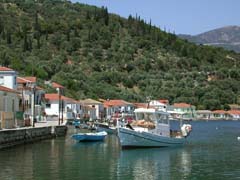
Information about Ithaca
general information
- Ithaca belongs to the Ionian islands cluster
- Ithaca covers around 592,022 square km
- Inhabitants approximately 108,046
- Capital is Ithaca City
- Coastline of 217 km
- Connection with the ports of Igoumenitsa and Patra
- Connection by ferry with the other Ionian islands
- Ithaca has its own International Airport with daily flights from Athens and thessaloniki

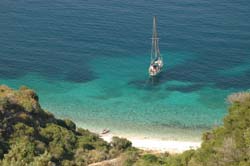 Throughout the ages Ithaca has been known as the home of Odysseus. For years Homer's hero wandered before he finally returned to his island kingdom. Though he visited beautiful, exotic, far-flung lands, Ithaca never left his mind for a moment. And even today, once you've been to Ithaca, it's difficult to forget this small, mountainous island with its captivating coves that conjure up some earthly paradise.
Ithaca is separated from Cephalonia by a channel some 2 to 4 kilometres wide. The west coast of the island is steep and almost barren in contrast to the green, gentle shoreline on the east.
The capital and largest settlement is Ithaki or Vathy; its red-roofed delightful houses set amidst enchanting scenery at the end of the deep closed bay of Molos. Taking the capital as a starting point, it's easy to get to know the island's landmarks.
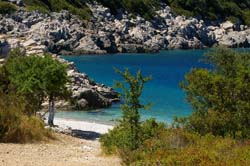
Three kilometres to the northwest lies the so-called Cave of the Nymphs (Nimfon Cave). Here according to the myth, Odysseus hid the gifts bestowed upon him by the Phaeacians who deposited him upon Ithaca's shores ten long years after the end of the Trojan War.
Also worth visiting is the medieval Monastery of the Archangels at Perahori. North of the capital and 600 metres above sea level, the Kathara Monastery (Moni Katharon) has a unique view of the island from its bell tower.
On the horizon you can make out the mountains of Akarnania, the Echinades islets, the peaks of Zakinthos, the eastern coast of Cephalonia and even the entrance to the Gulf of Patras.
The bay of Polis to the west is the site of another cave (Loizos' cave). Ôhis one yielded up sherds on which were carved inscriptions testifying to the worship of Artemis, Hera and Athena. Åíen more interesting, in the cave were also found recently twelve tripods similar to the other that the Phaeacians were supposed to have given to Odysseus.
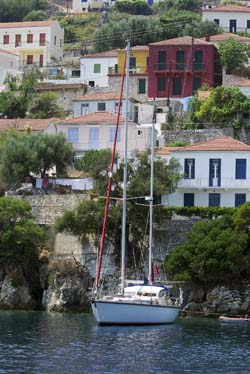
Stavros, a village 17 kilometres northwest of Ithaki, is a good base from which to explore the northern section of the island. About 1 kilometre north of Stavros is Pelikata; excavations ïn this hillside between the bays of Polis and Frikes brought to light remains of a small Bronze Age settlement. The finds unearthed there reinforce the theory that the ancient city of Ithaca lies somewhere in the vicinity. Kioni and Frikes, typically lonian villages, on the northeast coast are unspoilt, wonderful places for a short excursion or an extended sojourn.
Ithaca offers lovely beaches for bathing, caves for exploring and uncrowded hamlets where noisy nightlife is unheard of.
"When you set out for Ithaca", wrote the poet Constantine Kavafis. He was refering to Ithaca as one's ultimate destination. Thus, Ithaca, this verdant lonian island, may become your ïwn favourite place, a place that draws you back year after year, when yïu plan your summer holiday.
Local products:
:: Embroideries
:: Wine
:: Cheese & olive oil
:: Honey
Local events
:: Theatre Festival: during September
:: Festivals: From July 17th until September 9th
:: Music Festival: July-August
Ports of entry/exit
:: Ithaki (Vathy)
:: Ithaki (Piso Aetos)
:: Ithaki (Frikes)
Yacht supply station
:: Ithaki (Vathy)
Marinas - xxxxxxxxxxxxxxxxxxx
Area Code 26610
Police +30.26610.22650
Medical Assistance +30.26610.45811-5, +30.26610.36044
Information G.N.T.O. +30.26610.37520
Road Assistance (E.L.P.A.) +30.26610.39504
Aeroport +30.26610.30180
Olympic Airlines (Athens): 210/9292111, 9666666
Olympic Airlines (Ithaca): 26610/386994/6
Patras Port Authority: 2610/341002
Ithaca Port Authority: 26610/32655
Igoumenitsa Port Authority: 26650/22235
Bus Terminal (Athens): 210 5124910-1, 5132601
Bus Terminal (Ithaca, urban transport): 26610/32158
Bus Terminal (Ithaca, inter-island transport): 26610/39862/31595
Bus Terminal Salonica: 2310/536260
Travel in Ionian
Travel in Greece
All GreeceCentral Greece- About Central Greece
- Athens City
- Aitoloakarnania
- Attica
- Evrytania
- Evia island
- Fokida
- Fthiotida
- Viotia
Crete islandCyclades islands- About Cyclades islands
- Amorgos
- Anafi
- Andros
- Antiparos
- Delos
- Donoussa
- Folegandros
- Heraklia
- Ios
- Kea (Tzia)
- Keros
- Kimolos
- Koufonissia
- Kythnos
- Milos
- Mykonos
- Naxos
- Paros
- Santorini
- Schinoussa
- Serifos
- Sifnos
- Sikinos
- Syros
- Tinos
Dodecanese islands- About Dodecanese
- Agathonissi
- Arkyi
- Astypalea
- Halki
- Kalymnos
- Karpathos
- Kassos
- Kastelorizo (Megisti)
- Kos
- Leros
- Lypsi
- Nyssiros
- Patmos
- Rhodes
- Symi
- Telendos
- Tylos
EpirusIonian islandsMacedonia- About Macedonia
- Halkidiki
- Drama
- Florina
- Grevena
- Hemathia
- Kastoria
- Kavala
- Kilkis
- Kozani
- Pella
- Pieria
- Serres
- Thasos island
- Thessaloniki
North-eastern AegeanPeloponneseSaronic Gulf islandsSporades islandsThessalyThrace
Plan your holidays in Greece and the Greek islands.